
"Santos Arabica"
600 article(s) found
Do Brazilian Santos coffee beans taste good? What flavor and taste do you have, and what do you recommend for cooking?
Professional coffee knowledge exchange more coffee bean information please follow the coffee workshop (Wechat official account cafe_style) Brazil Santos coffee beans taste good? What flavor and taste do you have, and what do you recommend for cooking? Brazil accounts for 30% of global coffee production. Coffee is mainly produced in the southeast, mostly exported through the port of santos, hence the name Brazilian Santos coffee beans. Brazil

How does Brazilian Santos Coffee taste? description of the taste and flavor of Brazilian Santos coffee
Professional coffee knowledge exchange more coffee bean information please follow the coffee workshop (Wechat official account cafe_style) Brazilian coffee bean grading | Brazil Santos Stictly Soft extreme temperature and No.2 coffee naming? Brazil is one of the largest coffee producers in the world. It is the largest coffee producer, accounting for 1/3 of the global consumption of all grades and types of coffee.
Flavor and taste characteristics of Brazilian boutique coffee beans Grade Arabica Coffee Santos Black Coffee Flavor
Professional coffee knowledge exchange more coffee bean information please follow Coffee Workshop (Wechat official account cafe_style) Brazil, the world's largest coffee producer, covers both commercial and boutique coffee, while Brazil accounts for 30 per cent of global coffee usage. In addition to the original conditions such as climate, geographical area, etc.
Introduction to Brazilian Coffee Raw Bean
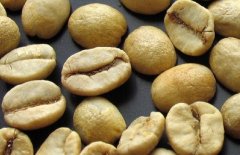
Brazilian coffee raw bean Brazil santos coffee green bean although the annual output of Brazilian coffee reaches 30% to 35% of the world, ranking first in the world, none of the Brazilian beans can be called the top coffee. There are coffee trees all over the mountains, distributed in the south of Brazil, but Santos is the only one that can be put on the table; most of the other beans are handled hastily.

Quality specification of Brazilian Santos coffee beans planting base map characteristic brand
The quality specification of Brazilian Santos coffee beans planting base map features the rich taste of the brand extends slowly on the tongue, completely sweeping the entire taste, and lasted for dozens of minutes. 1. Palate: slightly sweet with soft acidity, sweetness has its unique round ripe taste, its unique sweet, sour, bitter taste is extremely elegant. two。 Bouquet: intense aromas of fruit and grass. 3. Vision

Why can Brazil become a big coffee producer?
Brazilian coffee generally refers to coffee produced in Brazil. There is a wide variety of Brazilian coffee, the vast majority of which are unwashed and sun-dried, classified according to the name of the state of origin and the port of transport. Brazil has 21 states and 17 states produce coffee, but four of them produce the largest, accounting for 98% of the country's total output. Brazilian coffee has a low sour taste, which goes well with coffee.

Enthusiastic Brazilian Santos Coffee, how did Brazilian Coffee become the number one in the world?
Professional barista communication Please follow the coffee workshop (official Wechat account cafe_style) when it comes to Brazil, what do you remember? Give us the most impression, Brazil, that must be the exciting football, the Hercules Cup, the football star hired on the pitch, is the passionate samba, right? But Brazil, located in South America,
Definition of Coffee Tree basic knowledge of Fine Coffee
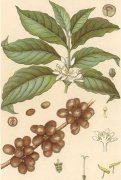
Coffee trees are evergreen shrubs with slender trunks and many branches. In order to facilitate harvesting, coffee trees on the farm are usually maintained at about 1.5 meters. Wild coffee trees may grow to seven or eight meters, or even as high as 10 meters. After the coffee is planted, it will take about five years to grow, blossom and bear fruit for the first time for farmers to harvest. In this long five years, the seeder can only expect; the burden of the backlog of funds.

Brazilian Coffee Bean Characteristics Flavor Description Grind Scale Variety Area Treatment
Brazilian Coffee Bean Characteristics Flavor Description Grind Scale Variety Production Area Treatment Brazil is figuratively compared to the giants and kings of the coffee world. There are about 3.97 billion coffee trees, and small farmers now grow 75 percent of Brazil's coffee. Brazil has twice or even three times as many coffee producers as Colombia, which is the world's second largest coffee producer.
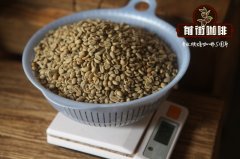
What are the flavor and taste characteristics of Brazilian coffee Santos coffee beans? Is the Brazilian coffee good?
Professional coffee knowledge exchange more coffee bean information please follow the coffee workshop (Wechat official account cafe_style) Brazilian coffee Santos coffee beans flavor and taste characteristics? Coffee beans-SANTOS, large, light green or yellowish beans, because local beans are mostly sun-treated, with brown cracks in the middle, and are almost always used for blending. Fragrance; fragrance

Introduction to Brazilian boutique coffee beans: what is the quality of Brazilian Santos coffee
Professional coffee knowledge exchange more coffee bean information Please follow the coffee workshop (Wechat official account cafe_style) the rich flavor slowly extends on the tongue, completely sweeping the entire taste, and lasted for dozens of minutes. 1. Palate: slightly sweet with soft acidity, sweetness has its unique round ripe taste, its unique sweet, sour, bitter taste is extremely elegant. two。 Aroma:

Brazilian Conillon Coffee Flavor description Price characteristics taste
Other kinds of Brazilian coffee, such as Rio and Parana, can be produced in large quantities because they do not need too much care. Although they taste rough, they can be regarded as a kind of good and cheap coffee. Because they are distributed all over Brazil and their solid quality varies, they have their own standards (NO.2~NO.8 according to the number of sundries, NO.13~NO.19 according to the size of beans, and six according to taste).

Flavor description of Brazilian Yellow bourbon Coffee Bean introduction to the method of Grinding and Calibration of varieties
The flavor description of Brazilian yellow bourbon coffee beans, the method of grinding and scale treatment introduces that other kinds of Brazilian coffee, such as Rio and Parana, can be produced in large quantities because they do not need too much care, although the taste is rough, but it is a kind of coffee with good quality and low cheap. because it is distributed all over Brazil and its solid quality varies, it has its own standard (depending on the number of sundries.

The output and export of Brazilian coffee beans introduce the classification of coffee taste
Generally speaking, coffee fruit appears red when it is ripe. But the yellow bourbon coffee is yellow. The phrase yellow (yellow: yellow) comes from this. Compared with other coffee trees, the production of yellow bourbon coffee tree is relatively low and its cultivation is very difficult. When the yellow bourbon coffee beans are fully ripe, they will appear bright yellow. The processed roasted coffee beans are dry and sweet, and emit a kind of

The output and export of Brazilian coffee beans introduce the classification of coffee taste
Generally speaking, coffee fruit appears red when it is ripe. But the yellow bourbon coffee is yellow. The phrase yellow (yellow: yellow) comes from this. Compared with other coffee trees, the production of yellow bourbon coffee tree is relatively low and its cultivation is very difficult. When the yellow bourbon coffee beans are fully ripe, they will appear bright yellow. The processed roasted coffee beans are dry and sweet, and emit a kind of

Brazilian Coffee Plantation Area Grinding Scale Processing Flavor Description Variety Introduction
Brazil has many large farms, operating endless coffee gardens, they use machine harvesting, and the use of machine drying, automated efficiency is very high, as if coffee as a general agricultural material, completely abandoned flavor and disregard. As a result, many specialty coffee companies simply do not sell Brazilian beans, lest they demean themselves

Description of Brazilian Coffee Flavor with mild Flavor characteristics of Grinding degree Variety Price Brand introduction
There are many large farms in Brazil, which run endless coffee plantations. They use machines to harvest and dry them. They are so efficient in automation that they regard coffee as a general agricultural material and completely abandon the flavor and flavor. As a result, many select coffee companies simply do not sell Brazilian beans so as not to demean themselves. In select coffee shops, Santos in Brazil still appears occasionally.

Description of the characteristics and Flavor of Brazilian Coffee beans Story Source of Brazilian Coffee production area
Brazil Hilado Coffee Bean characteristic Flavor description Taste treatment Variety producing region Brazil is vividly compared to the giant and monarch of the coffee world. There are about 3.97 billion coffee trees there, and small farmers now grow 75% of Brazil's total coffee production. Brazil produces twice or even three times as many coffee as Colombia, which is the second largest coffee in the world.

Coffee from Brazil
Although Brazil produces 30 to 35 percent of the world's coffee annually, ranking first in the world, no Brazilian bean is considered top-class coffee. Coffee trees abound in the southern regions of Brazil, but only Santos can be brought to the table; most of the other lightly processed beans are used to make instant coffee and easy-to-open coffee. Santos Coffee

Mild aromas Brazilian coffee Flavor description Treatment characteristics Variety Taste
Coffee production has gradually become a science since the introduction of coffee trees from Guyane française in 1720. Before 1990, the Brazilian government strictly controlled the coffee industry, with both severe interference and price protection measures, and the state has always implemented minimum price protection measures for farmers, resulting in coffee overproduction. Before World War II, surplus stocks amounted to 780